Write a 'How to Start Watercolor Painting: Complete Beginner's Guide' post
The Beginner’s Path to Watercolor Mastery
Watercolor is a transparent painting medium that uses water to carry pigment across specialized paper. Because the paint remains fluid and unforgiving, beginners benefit from learning a few core techniques—wet-on-dry, wet-on-wet, and color mixing—to create luminous, professional-looking artwork.
Unlike acrylics or oils, watercolor demands confidence. Once a stroke hits the paper, it is nearly impossible to alter completely. This transparency is both the medium’s greatest challenge and its most beautiful quality. The light reflects off the white paper beneath the pigment, creating a glow that no other medium can replicate.
By following this guide, you will move from blank paper to finished paintings. We will cover the essential supplies, master the foundational techniques, walk through three beginner-friendly projects, and avoid the common pitfalls that cause frustration.
Essential Watercolor Supplies for Beginners
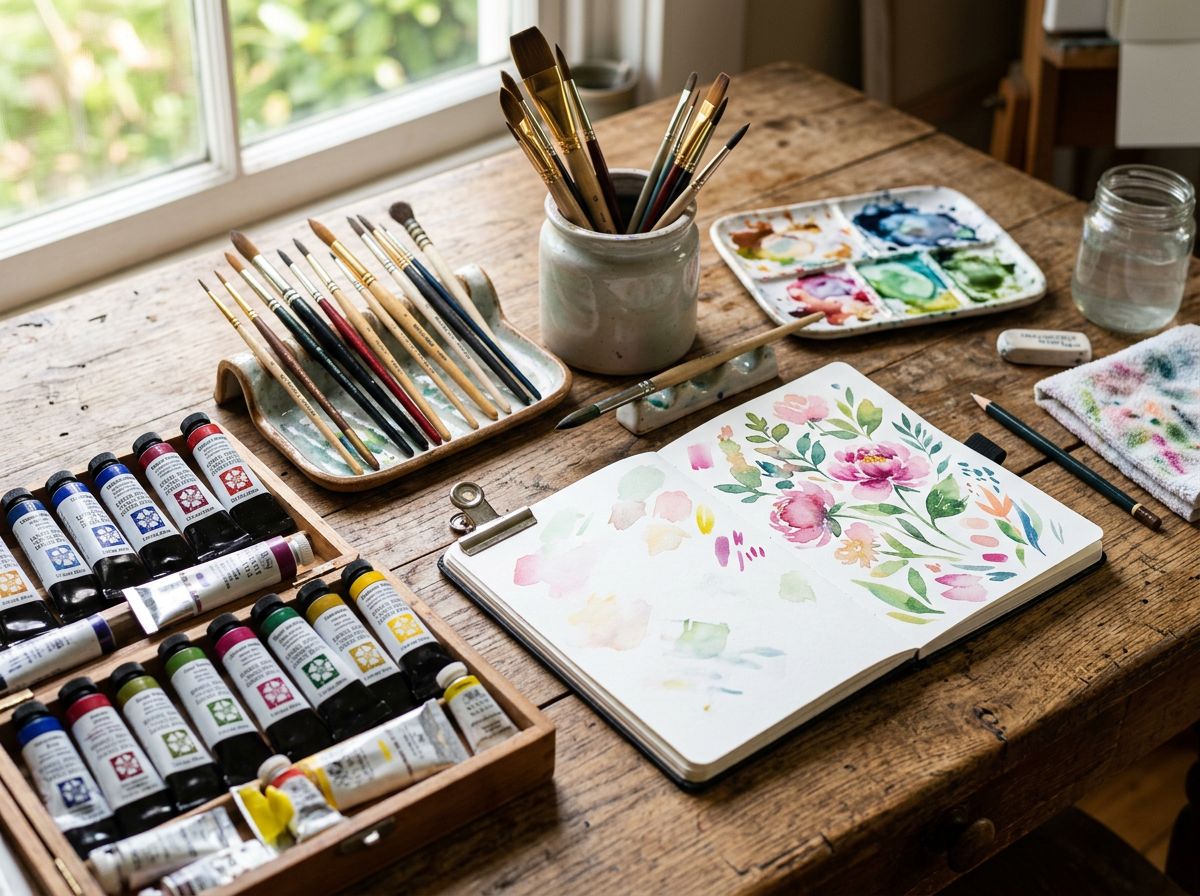
You do not need a full studio to begin. In fact, starting simple prevents overwhelm and lets you focus on learning the medium’s unique behavior. Here are the core items every beginner needs to get started effectively.
Choosing Your Watercolor Paint
Avoid cheap student-grade tubes initially if possible. A small set of pan paints or a few tubes of primary colors (Cerulean Blue, Ultramarine, Cadmium Yellow, Alizarin Crimson, Burnt Sienna) allows you to mix any color you desire. Quality pigments provide better vibrancy and lightfastness, meaning your artwork will last longer without fading.
For beginners, a compact travel set or a small metal tin with 6–12 pans is ideal. It is portable, mess-free, and contains enough variety to practice blending. As you progress, invest in single-pigment tubes for more control over your palette.
Selecting the Right Paper
This is where many beginners make the mistake of using standard printer paper. Watercolor requires thick, absorbent paper to hold water without buckling or tearing.
- Weight: Look for 140lb (300gsm) paper minimum. Thinner paper will warp as you work.
- Texture: Choose between Hot Press (smooth, good for detail) and Cold Press (slightly textured, best for general practice).
- Material: Professional-grade papers made from 100% cotton are significantly more durable and absorbent than cellulose-based papers. While cotton paper costs more upfront, its archival quality ensures paintings last for decades without yellowing or deteriorating, whereas cheaper cellulose papers often degrade over time.
Essential Brushes
Start with two versatile synthetic or squirrel-hair brushes:
- A #6 round brush for general painting and details.
- A #8 flat or wash brush for covering large areas with water and paint.
Investing in quality bristles makes a significant difference in control. A good brush holds a substantial amount of water, allowing for smooth, continuous strokes without constant reloading.
If you want to explore more options, check out our curated best watercolor brushes guide to find the perfect tools for your style.
Other Basics You Need
- A palette (a white ceramic plate works perfectly).
- A jar of clean water for rinsing.
- Tissue paper or a sponge for blotting excess water.
- A pencil (HB or 2B) and eraser for light sketching.
- A roll of masking tape to secure your paper to a board or table.
Mastering the Core Watercolor Techniques
Before diving into a full painting, practice these four fundamental techniques. They form the backbone of watercolor art and are used by professional artists worldwide.
Wet-on-Dry: Precision and Control
This is the easiest method for beginners. Apply wet paint onto dry paper. It offers the most control and creates sharp, defined edges. It is ideal for details, letters, and precise shapes.
Practice painting individual leaves, small flowers, or geometric shapes using this technique. The key is keeping your brush adequately loaded—dip, tap off excess, then apply with confidence.
Wet-on-Wet: Soft Blends and Atmosphere
Here, you wet the paper with clean water first, then apply paint. The paint blooms and spreads organically, creating soft, diffused edges. This is perfect for skies, backgrounds, and floral blends.
Pro Tip: Timing is key. If the paper dries too much, the effect is lost. If it’s too wet, the paint may pool unevenly. Wait until the paper loses its glossy sheen before applying color—this is the ideal window.
Mixing Colors Like a Pro
Watercolor is transparent. Unlike acrylics or oils, you cannot easily cover up mistakes. Instead of buying every color in the spectrum, learn to mix your own. For example, mixing Ultramarine Blue and Burnt Sienna creates a rich, complex purple. Experimenting with mixing builds intuition for color harmony.
Try these classic combinations:
- Ultramarine Blue + Yellow: A vibrant, clean green.
- Cadmium Red + Yellow: A warm, energetic orange.
- Phthalo Blue + Alizarin Crimson: A deep, moody violet.
Applying a Flat Wash
A “wash” is an even layer of color across the paper. To achieve a smooth wash, load your brush generously and apply the paint in continuous, overlapping strokes. Keep your brush wet and move quickly to prevent ring marks.
Practice covering an entire sheet evenly—this seems simple but takes patience. The goal is uniform color with no streaks or dark spots at the bottom where water pools.
Three Simple Projects for Beginners
Now that you understand the basics, let’s put theory into practice with three manageable projects that reinforce different skills.
Project 1: The Gradient Sky (Wet-on-Wet)
Goal: Master the wet-on-wet technique and color blending.
- Wet an entire sheet of paper with clean water using a large flat brush. Keep the surface evenly damp.
- Load your brush with a mix of Cobalt Blue and a touch of Yellow Ochre. Starting at the top of the paper, apply the paint and let it flow downward naturally.
- As the color descends, add a little more water to lighten it, creating a smooth transition from deep blue at the top to pale yellow near the horizon.
- Let the paper dry completely. You now have a beautiful sunset sky ready for silhouettes or clouds.
Project 2: Simple Leaf Study (Wet-on-Dry)
Goal: Practice precision, brush control, and color mixing.
- Mix a green using Ultramarine Blue and Cadmium Yellow. Add a touch of Burnt Sienna for a more natural, earthy tone.
- Skip lightly sketching leaf shapes on dry paper, then paint each leaf in a single stroke, starting from the stem and sweeping outward.
- Vary pressure on your brush: press harder at the base for a thicker stem, lift gradually toward the tip for a pointed finish.
- Add veins using a fine-point brush with darker pigment once the leaves are dry.
Project 3: First Landscape (Combining Techniques)
Let’s put these skills together by painting a simple sunset over mountains using the wet-on-wet technique.
Step 1: Preparing the Sky
With a large brush, wet the top third of your paper with clean water. While the paper is still damp, load your brush with a mix of Yellow Ochre and a touch of Red. Paint horizontally across the wet area. The colors will bleed into each other softly.
Step 2: Adding the Mountains
While the sky is still slightly damp (but not dripping), use a smaller round brush to paint dark blue-grey mountains at the horizon line. The moisture in the paper will create a soft, atmospheric base for the mountains.
Step 3: Defining Foreground Details
Once the painting is completely dry, use a fine-point brush with darker pigment to add foreground elements like grass or trees. Because the background is dry, these lines will be crisp and clear, adding depth to the piece.
For more project ideas and step-by-step walkthroughs, explore our comprehensive beginner paint sets guide to find everything you need to complete these exercises.
Common Watercolor Mistakes to Avoid
Even experienced artists encounter these pitfalls. Avoiding them early will save you frustration and improve the quality of your artwork.
- Using Too Much Water: Beginners often dilute paint until it looks like ink. Remember, watercolor needs body. Use less water for vibrant colors and more for subtle tints.
- Overworking the Paper: Scrubbing back and forth with your brush damages the tooth of the paper, causing “lifting” or holes. Let layers dry before adding new ones.
- Ignoring Drying Time: Watercolor dries lighter than it appears when wet. Wait for sections to dry before judging their value to avoid accidentally making them too dark.
- Skipping Practice Swatches: Before committing to your final piece, test your mixed colors on a scrap piece of the same paper. This helps you predict how the pigment will behave.
Frequently Asked Questions
How long does watercolor take to dry?
Drying time depends on humidity, paper thickness, and paint saturation. On average, a thin wash takes 10–20 minutes, while heavy applications can take several hours. Always wait until the paper is completely dry before evaluating your work.
Can I use regular paper for watercolor?
No. Standard paper is not thick enough to absorb water without buckling or tearing. Always use dedicated watercolor paper (minimum 140lb/300gsm) to ensure proper results.
What is the best paper for beginners?
Cold press paper is generally recommended for beginners because its slight texture provides forgiveness and helps hide minor imperfections while you learn.
How do I fix mistakes in watercolor?
Watercolor is notoriously difficult to erase once dry. However, you can lift wet paint with a clean, damp brush or use a stiff brush to gently scrub at dried areas. Prevention through careful planning is always the best strategy.
Should I tape my paper down?
Yes, especially as a beginner. Taping your paper to a board prevents buckling when the paper gets wet and keeps your surface flat for smoother brushwork. Use painter’s tape or masking tape along all four edges.
Where to Find More Watercolor Resources
To continue building your skills beyond this guide, explore additional tutorials and inspiration at Pinterest Cardue.
Your Watercolor Journey Starts Today
Watercolor is a lifelong journey of discovery that rewards patience and practice. By starting with high-quality materials, mastering the wet-on-dry and wet-on-wet techniques, and learning from common mistakes, you will build a strong foundation for your artistic career. Embrace the unpredictability of the medium, experiment with different textures and pigments, and most importantly, enjoy the creative process. Whether you aim for professional recognition or simply want a relaxing hobby, watercolor offers endless possibilities for self-expression.




0 comments