The Art of Snail Mail
What Is the Snail Mail Trend and Why Is It Surging?
Snail mail—the practice of sending physical, handwritten letters through the postal service—has seen a massive resurgence, with Google Trends data showing a 700% surge in searches for "snail mail club" over the past year. Driven primarily by Gen Z and millennials seeking relief from digital overload, the movement encompasses pen pals, subscription mailer clubs, and analog stationery crafting as deliberate practices for mindfulness and deeper connection.
What Is the Snail Mail Revival?
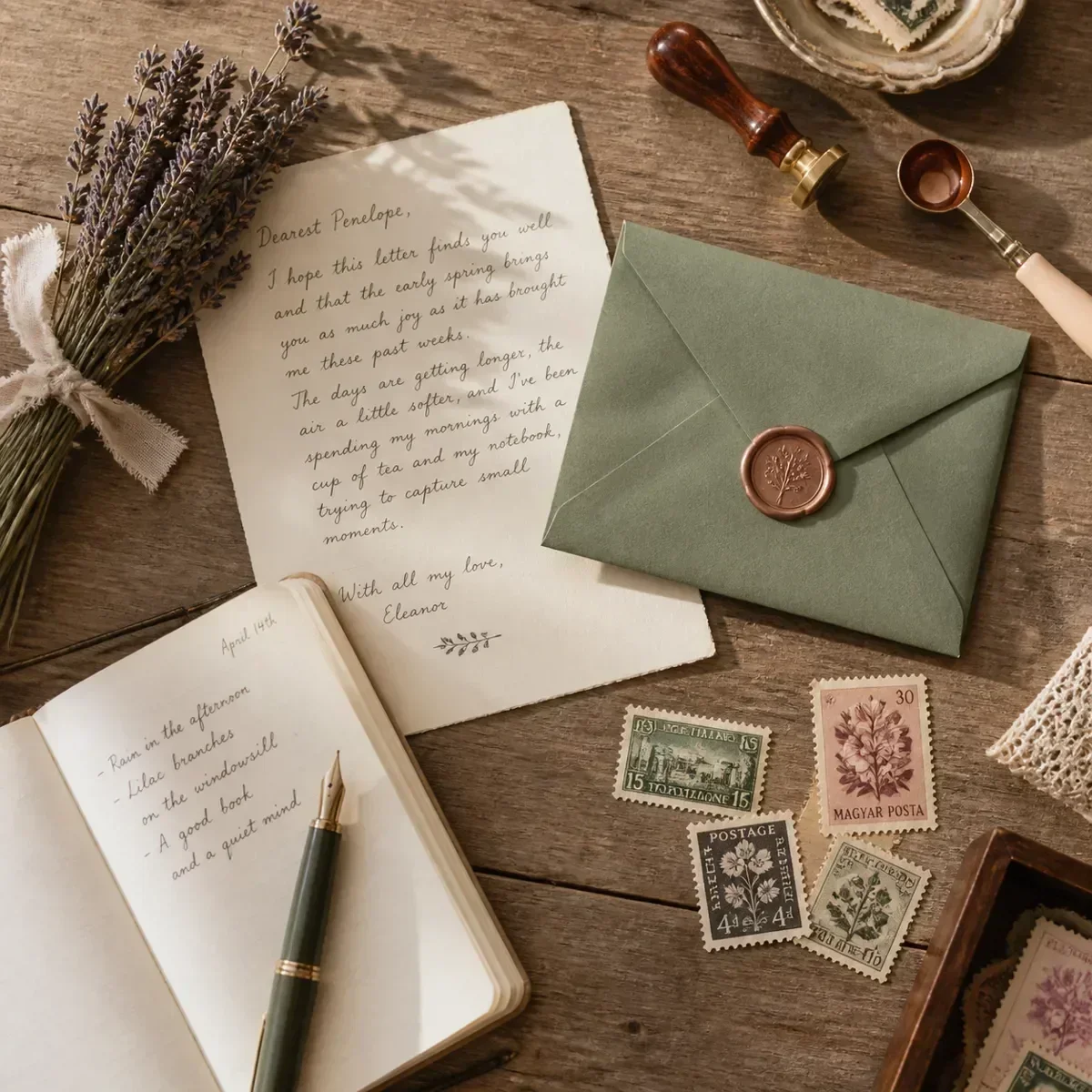
At its core, snail mail refers to physical, handwritten correspondence traveling through the postal service rather than digital networks. However, the current trend has evolved into a multifaceted movement with distinct subcultures:
- Snail mail clubs: Monthly subscription services where creators send curated, themed physical mailers to subscribers, including handwritten letters, art prints, stickers, and journal prompts.
- Pen pal communities: Online and offline networks connecting people who write long-form letters to strangers, with hundreds of thousands of members across platforms like Reddit.
- Analog stationery crafting: Creative hobbies including wax sealing, vintage envelope decorating, hand-lettering, and mail art.
- Correspondence as therapy: The use of letter writing as a deliberate practice for mindfulness, self-reflection, and building meaningful, slower-paced connections.
What Is Driving the Surge in Physical Correspondence?
The resurgence of snail mail is rooted in psychology rather than mere nostalgia. Modern communication has shifted toward high-speed, low-effort interactions that often lack depth.
How Does Digital Overload Affect Communication?
The average person receives between 100 and 150 emails per day, alongside countless notifications, direct messages, and group chats. According to Business Insider, younger generations are actively seeking respite from the "brainrot" of algorithmic content. They are turning to physical mail to escape the constant demand for attention from screens.
Why Is Handwritten Content More Impactful Than Digital Messages?
A reaction emoji is not equivalent to someone sitting down, thinking about you specifically, and investing time in a tangible object. As noted by Form Wellness, "Paper creates a safe space." Your nervous system recognizes the biological signals of effort found in a letter: the weight of the paper, the pressure of the pen strokes, and the unique variations in ink. These imperfections prove that someone dedicated time to you.
Does Writing by Hand Change Cognitive Processing?
Research consistently demonstrates that handwriting engages the brain differently than typing. It activates areas tied to memory, emotional processing, and creativity. For the writer, a letter provides a single-task experience free from autocorrect, deletion, or algorithmic judgment.
How Does Snail Mail Connect to Journaling and Art?
Snail mail rarely exists in isolation. For many practitioners, sending a physical letter is a natural extension of broader creative practices—journaling, sketching, watercolor, and mixed-media art. The tactile rituals overlap significantly: both involve choosing textures, layering mediums, and preserving a moment in time. If you are already drawn to analog creativity, snail mail is simply another canvas for your hand.
Consider the Scribble Art Junk Journal. Junk journals thrive on layering ephemera, ticket stubs, washi tape, and freeform sketches into deeply personal scrapbooks. The same impulse that drives someone to fill a junk journal page also motivates a letter-writer to tuck a pressed flower or a hand-drawn doodle into an envelope. Both practices reward patience, visual experimentation, and the kind of unstructured play that screens rarely allow.
Watercolorists will also find a natural bridge. The 30 Day Watercolor Challenge encourages daily practice through small, focused studies—something that translates beautifully to the margins of a letter. Sketching a quick botanical study, a landscape vignette, or a decorative border on your stationery turns a plain page into a miniature art piece. Many snail mail enthusiasts incorporate hand-painted envelopes, watercolor postcards, and illustrated letterheads precisely because the medium rewards the same deliberate, unhurried attention that makes analog hobbies so restorative.
Practical Ways to Merge Snail Mail with Art Practices
- Sketch in the margins: Even rough pencil doodles or tiny ink drawings add personality and signal effort.
- Paint a mini postcard: A 4×6 watercolor scene attached to a letter is a surprise gift that recipients often keep forever.
- Layer ephemera: Stamps, ticket stubs, and torn paper edges create texture reminiscent of junk journal pages.
- Experiment with mixed media: Combine ink, watercolor, collage, and wax seals on a single envelope for a tactile experience.
What Are the Essentials for Starting a Snail Mail Setup?
Joining the movement does not require expensive equipment, but the right tools transform the process from a chore into a ritual. Below are the essential categories and top-rated products recommended by the community.
Which Stationery Sets Are Best for Beginners?
-

ArtCreativity 100-Piece Vintage Airmail Stationery Set
Double-sided, 100gsm paper preventing ink bleed-through, with classic retro red-and-blue airmail borders. Includes 50 lined pages and 50 coordinating envelopes.
$16.99 $18.99 · 4.6/5 stars · Prime eligible
View on Amazon -
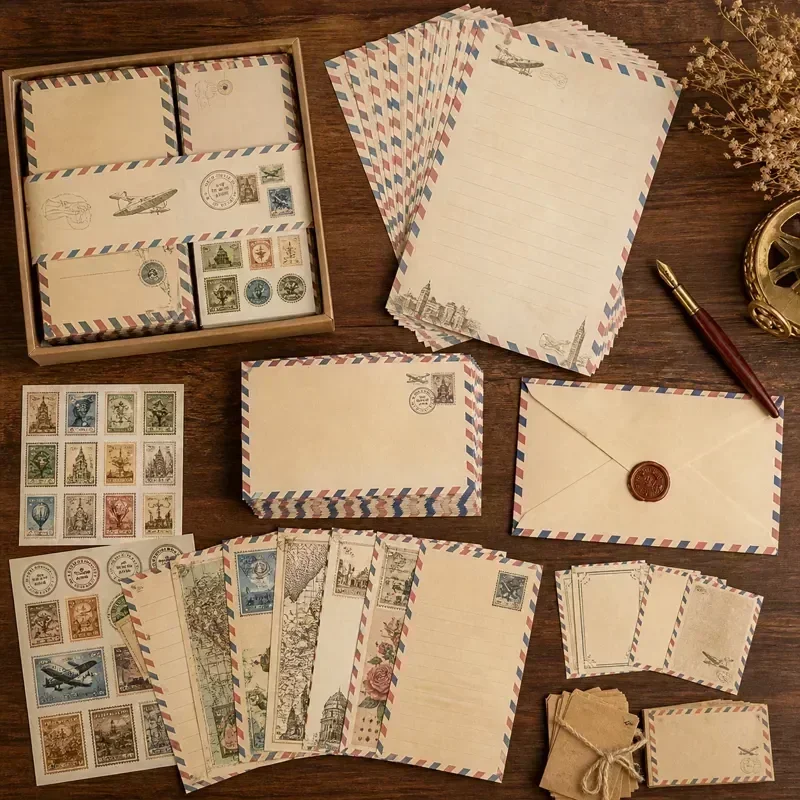
TaoBary 160-Piece Vintage Airmail Stationery Set
Includes 50 double-sided letter sheets, 50 matching envelopes, and 60 round dot stickers in 10 vintage designs. Ideal for experimenting with different aesthetics.
$13.99 · 4.5/5 stars · Prime eligible
View on Amazon
What Interactive Kits Are Popular for Correspondence?
-
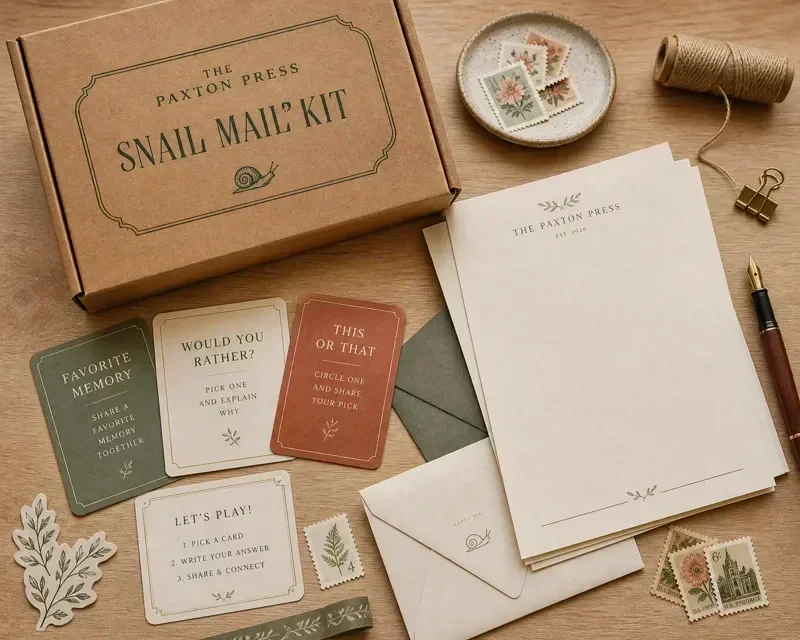
The Paxton Press Snail Mail Kit
A complete interactive experience featuring 4 premium letterheads, 4 snail-print mailing envelopes, storytelling games, bridge-building games, and book recommendation cards.
$22.00 $23.99 · 5.0/5 stars
View on Amazon
Which Wax Seal Kits Offer the Best Value?
-
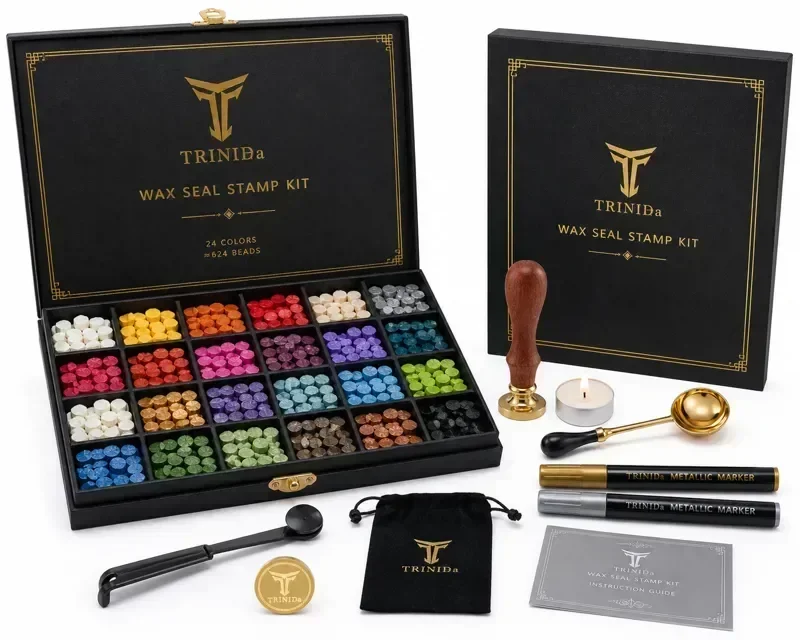
TRINIDa Wax Seal Stamp Kit — 24 Colors, 624 Beads
A beginner-friendly, smokeless, bubble-free wax bead kit in 24 colors. Includes a warmer, spoon, metallic pens, and 10 wax envelopes.
$15.99 $19.99 · 4.8/5 stars · Prime eligible
View on Amazon -
Aottom Wax Seal Kit — 48 Colors, 1,248 Beads
For serious hobbyists, this bundle includes nearly 1,300 wax beads in 48 colors, a melting pot, spoon, and tea light candles with an eco-friendly, smokeless formula.
$19.96 · 4.8/5 stars · Prime eligible
View on Amazon
Which Pens Provide the Best Writing Experience?
-
EYEYE 8-Pack Assorted Color Fountain Pens
Affordable liquid fountain pens with fine 0.5mm stainless steel nibs. Quick-drying and bleed-resistant, available in assorted colors for color-coding letters.
$7.49 · 4.5/5 stars · Prime eligible
View on Amazon -
Ren Handcraft Wooden Pen Set — Fountain, Ballpoint & Gel
Handcrafted from natural rosewood, this 3-pen set includes a fountain pen with converter, ballpoint, and gel pen with Japanese-import refills and German-iridium nibs.
$18.85 · 4.4/5 stars · Prime eligible
View on Amazon
Which Finishing Touches Enhance Vintage Envelopes?
-
Outus 33-Piece Vintage Wax Seal Stationery Set
An all-in-one retro set with 12 vintage letter sheets, 12 retro envelopes, wax seal stamps, wax sticks, tea candles, and a spoon for creating old-world correspondence.
$20.99 $22.49 · 4.6/5 stars · Prime eligible
View on Amazon -
SIBLYMONA 184-Piece Vintage Stamp Stickers
High-quality kraft paper decorative stamp stickers in four themes: jungle butterflies, forest stories, oil painting reproductions, and floral museum artworks.
$9.99 · 4.3/5 stars · Prime eligible
View on Amazon
How Do You Write Your First Letter Without Overthinking It?
The barrier to entry is low, but the first letter can feel daunting. Follow this practical framework to begin:
- Pick a recipient and commit: Whether it is a parent, friend, or a stranger through a pen pal service, specificity changes the energy of the page.
- Set a timer for 20 minutes: Writing for a fixed duration removes the paralysis of wondering how long the letter should be.
- Start with a sensory detail: Ground the letter in a moment the reader can inhabit, such as the sunlight on your desk or a cooling cup of tea, rather than a generic greeting.
- Include something unexpected: Add a pressed leaf, a small doodle, or a grocery list of funny things. The magic of snail mail lies in the tangents that text messages usually edit out.
- Address the envelope by hand: Allow the address to be imperfect; the slight crookedness of handwriting is part of what makes the letter precious.
- Buy a thematic stamp: Seasonal, artistic, or obscure stamps turn postage into an extension of the gift.
How Does Snail Mail Compare to Digital Messaging?
| Dimension | Text / Email | Handwritten Letter |
|---|---|---|
| Speed | Instant | Days or weeks |
| Permanence | Ephemeral; disappears in feeds | Physical object that lasts for years |
| Effort signal | Minimal; low friction to send | High; demonstrates deliberate investment |
| Sensory richness | Visual only (screen) | Touch, smell, sight, sound of unfolding |
| Single-tasking | Multitasked alongside everything else | Inherently a focused, solitary act |
| Emotional impact | Low signal-to-noise ratio | High; stops you in your tracks |
What Is the Broader Cultural Context of the Analog Turn?
The snail mail trend is part of a wider "analog turn" gaining momentum throughout 2025 and 2026. Disposable cameras are selling out, vinyl records continue to outsell streaming in certain demographics, and hobbies like pottery, embroidery, and film photography are surging. The common thread is a generation optimizing their lives for efficiency waking up to question whether frictionlessness leads to fulfillment.
A life without texture or slowness often lacks the friction that forces us to notice. As one letter-writing practitioner stated, "We have not stopped wanting to feel known. We have just been handed an enormous number of tools that are very good at simulating that feeling without quite delivering it." A letter is not a simulation; it is proof—imperfect, slightly crumpled, and entirely real.
Frequently Asked Questions
Is snail mail expensive to maintain?
Not necessarily. Basic stationery sets start around $14, and fountain pens can be found for under $10. While wax sealing kits cost between $16 and $20, you can start with simple paper and stamps for less than $20 total. The USPS offers a wide variety of affordable thematic stamps to keep costs manageable.
How do I find a pen pal online?
You can join dedicated pen pal platforms or browse large communities on Reddit. Many enthusiasts also participate in monthly snail mail clubs that match subscribers based on shared interests and writing styles.
What type of paper is best for handwritten letters?
Look for 100gsm paper or higher to prevent ink bleed-through, especially if using fountain pens. Double-sided stationery with coordinated envelopes is ideal for beginners. Vintage airmail styles and cream-colored paper are popular choices for their tactile appeal.
Can snail mail help with anxiety or mindfulness?
Yes. The act of slowing down to write by hand engages the brain's memory and emotional processing centers. It serves as a single-tasking practice that reduces the mental clutter caused by constant digital notifications, offering a meditative experience for many practitioners.
What is the average time it takes to receive a letter?
Domestic mail typically takes 2–5 business days, while international mail can take 1–3 weeks. The delay is a feature of the trend, allowing the anticipation to build and giving the sender and receiver time to reflect.
Conclusion
The snail mail revival is not a passing fad; it is a correction. It represents a collective decision that life has become too fast, too frictionless, and too easy to consume without truly feeling. The solution is not a better app, but something you can hold.
Grab a pen, find a piece of paper that feels good between your fingers, and write something real to someone you care about—or to someone you do not know yet. Seal it with intention, drop it in a mailbox, and trade speed for substance, one letter at a time.


0 comments