Watercolor for Absolute Beginners' mega-guide
The Ultimate Watercolor for Absolute Beginners: A Complete Mega-Guide
Watercolor painting is an art form defined by its transparency and fluidity—pigment suspended in water allows light to reflect off the paper, creating luminous, delicate effects that are impossible to achieve with opaque mediums. Because the paint thins as it spreads, beginners can achieve complex depth and soft gradients simply by mastering water control and basic brush handling.
Welcome to the world of watercolor—a medium that is as forgiving as it is magical. If you’ve ever felt intimidated by the unpredictability of paint and water, or found yourself scrolling through endless articles about brushes, paper, and washes, you are in the right place.
At ArtCraftLove, we believe that great art begins with a solid foundation. Rather than scattering advice across multiple posts, we have consolidated everything you need to know into this single, comprehensive guide. Whether you are holding your first brush or looking to refine your technique, this mega-guide will walk you through every step of your journey.
1. What Essential Supplies Do I Need to Start Watercolor?
One of the biggest mistakes beginners make is buying expensive equipment before understanding the basics. You do not need a professional-grade studio to start. Here is the minimal, effective kit for absolute beginners:
Quality Paper (The Most Important Item)
Never use standard printer paper. Watercolor paper is thick, absorbent, and textured. Look for 140lb (300gsm) cold-press paper. It holds water well and doesn’t buckle easily.
- Cold Press: Medium texture; best for general use.
- Hot Press: Smooth surface; good for detailed illustrations.
- Cotton vs. Cellulose: Cotton is archival and expensive; cellulose is great for practice.
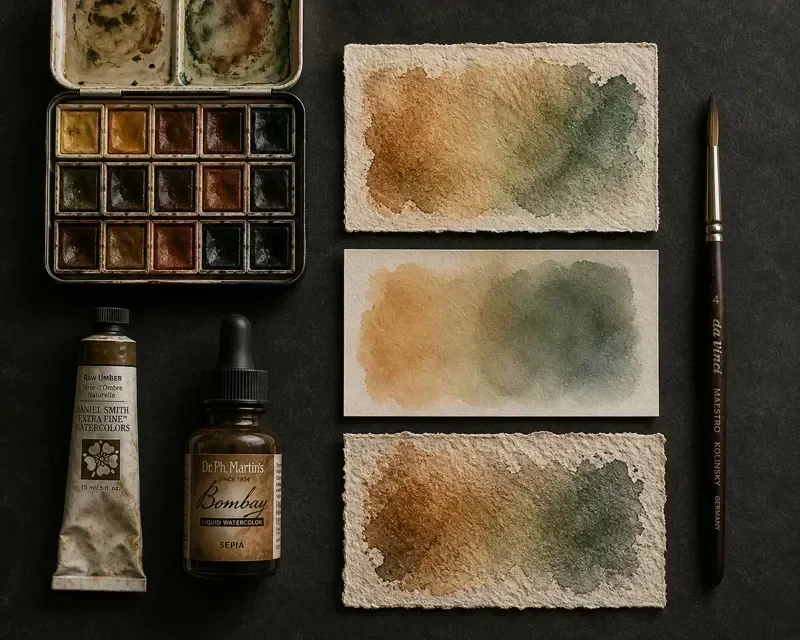
A Starter Paint Set
Start with a small pan set or tube set containing 6–12 colors. Avoid "student grade" paints with too much filler; look for artist-grade or high-quality student grade (like Van Gogh or Winsor & Newton Cotman).
Tip: If you only buy two colors, get Cerulean Blue and Burnt Sienna. These two mix to create almost every other color you’ll need.
Brushes
You don’t need many brushes. Start with two sizes:
- #6 Round: The workhorse. Good for details and general painting.
- #10 or #12 Flat: Great for large washes and filling in areas quickly.
Basic Tools
Keep it simple. You need:
- A jar for rinsing brushes (two jars are better: one for rinsing, one for clean water).
- A soft sponge or paper towels for blotting.
- A spray bottle or dropper to activate your paints.
2. How Does Watercolor Drying Time Compare to Acrylics?
Understanding the physical properties of your medium is crucial for success. Unlike acrylics, which dry within 15–30 minutes and become permanent, watercolor remains water-soluble even after it dries.
This characteristic means:
- You can reactivate dried paint with a wet brush to blend colors seamlessly.
- You have less time to correct mistakes, requiring faster, more decisive brushwork.
- It allows for unique layering techniques (glazing) that are difficult to replicate with opaque mediums.
Because watercolor dries significantly lighter than it looks when wet, practicing this "wet vs. dry" value shift is one of the first skills every beginner must master.
3. What Are the Basic Watercolor Techniques I Should Learn First?
Once you have your supplies, focus on these foundational techniques:
Flat Washes
A flat wash is a single, uniform layer of color. To achieve this, load your brush generously and apply the paint in smooth, overlapping strokes. Work from top to bottom to prevent "tide marks" (uneven edges caused by dried paint meeting wet paint).
Graded Washes
In a graded wash, the color transitions from dark to light. Start with a concentrated mixture at the top of your paper and gradually dilute the paint with clean water as you move downward, using a clean, damp brush to blend the transition.
Lifting
Because watercolor is transparent, you can lift pigment off the paper to create highlights or correct errors. Use a damp, clean brush or a paper towel to gently dab away wet or semi-dry paint.
4. What Common Mistakes Should I Avoid?
Even experienced artists encounter these hurdles. Here is how to sidestep them:
- Using too much water: This leads to muddy, indistinct shapes. Control your water-to-paint ratio carefully.
- Overworking the paint: Scrubbing the paper repeatedly damages the tooth of the paper and creates dull, gray patches.
- Fear of the white: Don't cover every inch of the paper with paint. Leaving areas of white paper untouched creates the brightest highlights.
Frequently Asked Questions
Conclusion
Watercolor is a journey of embracing imperfection and learning to work with the flow of the medium. By equipping yourself with the right supplies, understanding the difference between watercolor and acrylics, and practicing core techniques like flat and graded washes, you are well on your way to creating beautiful art.



0 comments