Zentangles For Beginners
Best Supplies for Zentangle Beginners on Amazon
You can start with any smooth paper and a black pen, but the right supplies make a noticeable difference. Fineliner pens give crisp lines, cotton tiles handle ink well, and a blending stump makes shading easier. The Tombow Fudenosuke brush pens are also an excellent choice for beginners who want line variation without needing multiple fineliners.
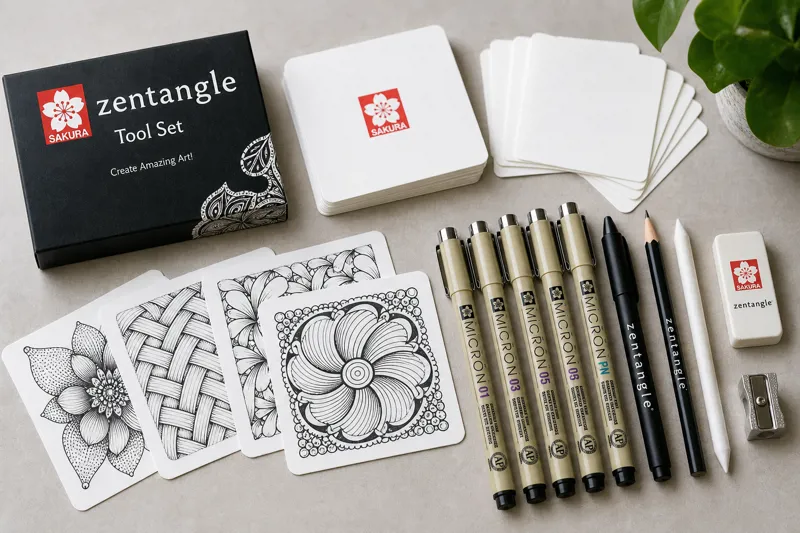
Sakura Zentangle Tool Set, White Paper Tiles, 3.5 Inch, 12 Piece Set
Price: $15.82
A compact starter set with official-style 3.5-inch tiles. Rated 4.8 out of 5 stars and Prime eligible.
View on Amazon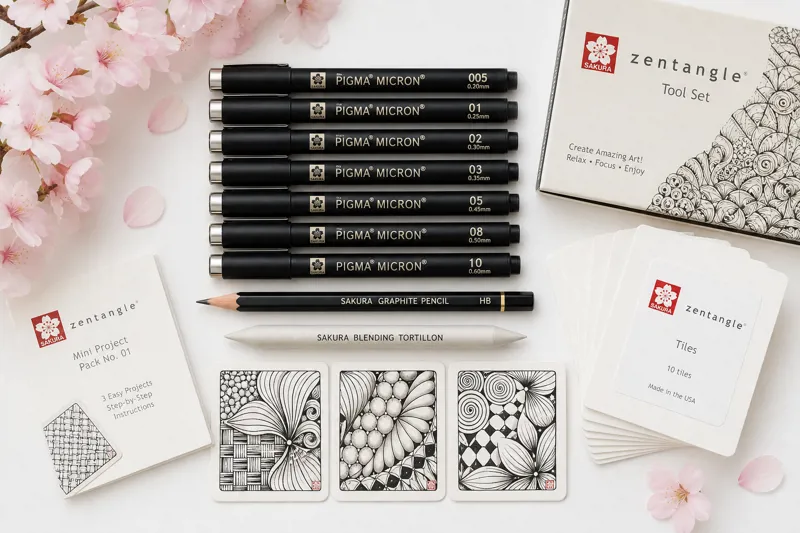
SAKURA Zentangle Tool Set with Micron Pens, Graphite Pencil, Tortillion and Tiles
Price: $29.73 List price: $29.96
A fuller beginner bundle with black Micron pens, pencil, blending stump, and white tiles. Rated 5.0 out of 5 stars and Prime eligible.
View on Amazon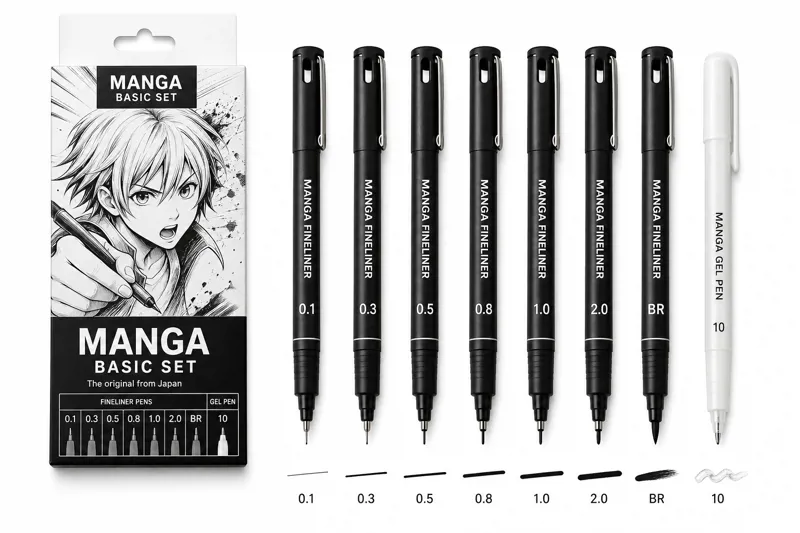
Sakura Pigma Manga Basic Set
Price: $9.29
Includes useful pen sizes for line variation, including 005, 01, 05, 08, brush, and white. Rated 4.7 out of 5 stars and Prime eligible.
View on Amazon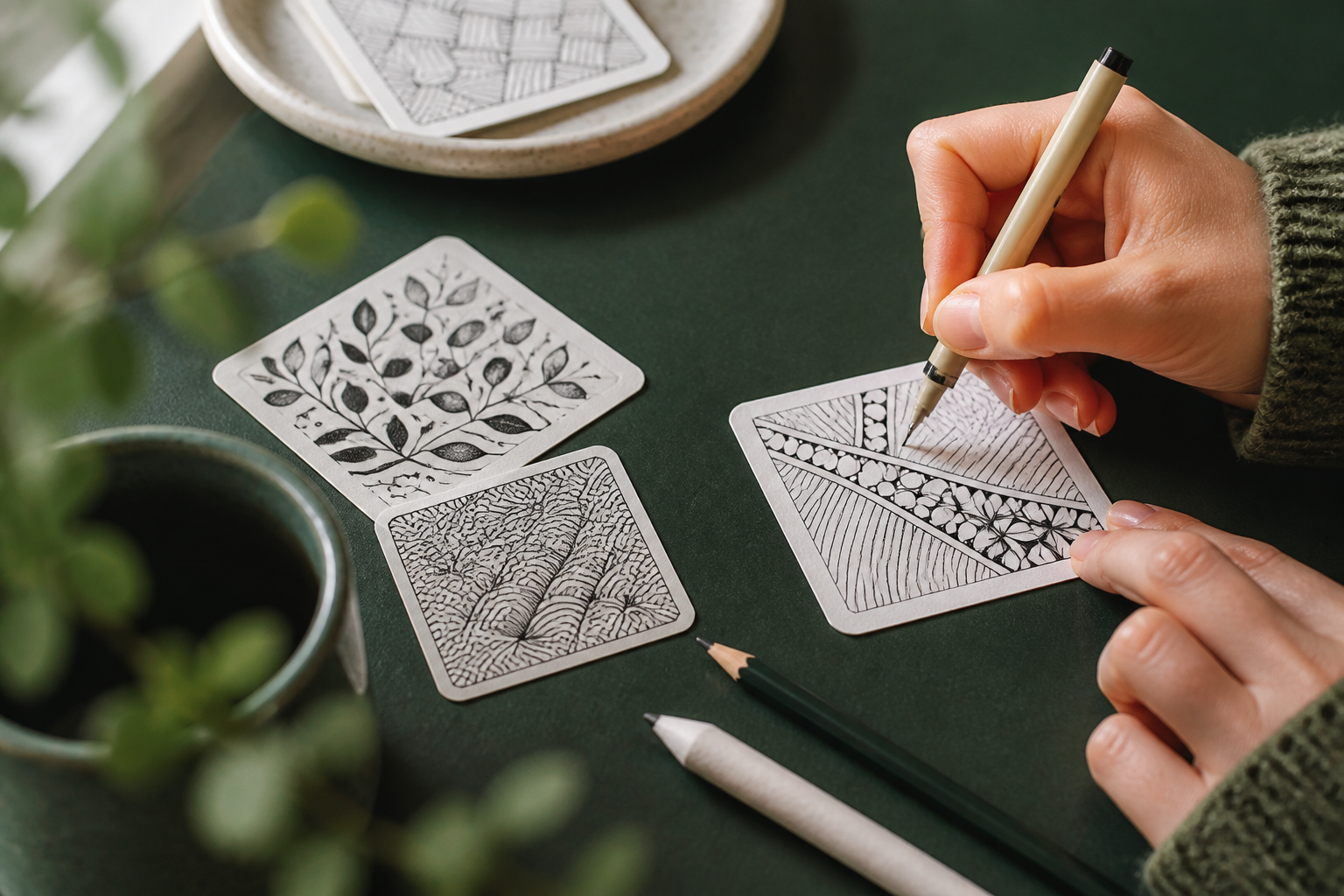
Tombow 62038 Fudenosuke Brush Pen, 2-Pack. Soft and Hard Tip Fudenosuke Brush Pens for Calligraphy and Art Drawings
Price: $5.87
Contains both the soft and hard tip Fudenosuke Brush Pens. Create extra-fine, fine, or medium strokes by changing brush pressure. Rated 4.7 out of 5 stars and Prime eligible.
View on AmazonSAKURA Gelly Roll Classic White Gel Pen Set, 3 Pack
Price: $5.79
Useful for highlights, black tiles, and finishing details. Rated 4.4 out of 5 stars and Prime eligible.
View on AmazonTombow Fudenosuke Brush Pen, 6-Pack, Hard Tip (GCD-111) x3, Soft (GCD-112) x3
Price: $9.10
Six-pack with three hard-tip and three soft-tip Fudenosuke brushes. Great for beginners who want to experiment with both nib types. Rated 4.8 out of 5 stars and Prime eligible.
View on AmazonWhy Tombow Fudenosuke Pens Are Great for Zentangle
The Tombow Fudenosuke brush pen is a favorite among calligraphers, lettering artists, and Zentangle beginners alike. Available with either a hard tip or a soft tip, these pens use water-based, pigmented black ink that flows smoothly on paper tiles and produces line variation simply by adjusting brush pressure. Press lightly for an extra-fine hairline stroke, or press harder for a bold, medium-width line — all with a single pen.
The hard-tip version offers more control for precise geometric patterns and lettering, while the soft tip provides a flexible, expressive quality that works beautifully for organic tangles like leaf vines, flowing curves, and shaded accents. Many beginners buy a two-pack containing both tips to compare and decide which feels most natural for their style.
Compared to standard fineliners, the Fudenosuke lets you achieve both thin outlines and thick fills from one tool, reducing the number of pens you need on your workspace. They are affordable (the two-pack retails around $5.87), widely available on Amazon, and carry a 4.7-star average rating from thousands of reviewers.
Which Zentangle Supplies Should You Buy First?
If you are just starting, avoid buying a large collection of pens before you know what you enjoy. A small, high-quality setup is better than a crowded desk.
| Beginner Need | Best Choice | Why It Helps |
|---|---|---|
| All-in-one starter kit | Sakura Zentangle Tool Set, 12 Piece | Simple, affordable, and includes tiles for immediate practice |
| Better tool variety | SAKURA Zentangle Tool Set with Micron Pens | Good for beginners who want pens, shading tools, and tiles together |
| Line work practice | Sakura Pigma Manga Basic Set | Multiple nib sizes help create contrast and detail |
| Line variation in one pen | Tombow Fudenosuke Brush Pen 2-Pack | Hard and soft tips for thin lines, thick fills, and expressive strokes |
| Highlights and black paper | SAKURA Gelly Roll White Gel Pens | Adds bright details and finishing touches |
For most beginners, the best value is a Zentangle tool set plus the Tombow Fudenosuke two-pack. Start with black ink on white tiles, then add white gel pens once you begin experimenting with darker paper or highlights.
Frequently Asked Questions
What is a Zentangle?
Zentangle is a meditative drawing method based on structured, repetitive patterns called “tangles.” Each tile begins with a spontaneous “seed” — a few initial marks — that guides the development of the full design. The practice encourages mindfulness, focusing entirely on the stroke rather than the outcome.
Do I need special Zentangle supplies?
No. Any smooth paper and a fine black pen will work. That said, having a small set of quality fineliners (such as Sakura Pigma Manga), a blending stump for shading, and a couple of brush pens (like the Tombow Fudenosuke) dramatically improves the experience. Starter kits from Sakura include everything you need to begin immediately.
How long does it take to complete a Zentangle tile?
Most beginners finish a tile in 15 to 45 minutes. A simple tangle with three or four patterns takes less time, while complex designs with heavy shading and cross-hatching can take an hour or more. The goal is progress, not speed.
Can anyone learn Zentangle?
Absolutely. Zentangle was specifically designed for people of all skill levels. You do not need prior drawing experience. The structured approach — one small pattern at a time — removes the intimidation factor that often discourages beginners from trying art.
What is the easiest Zentangle pattern for beginners?
The simplest patterns rely on basic strokes: straight lines, curved lines, dots, and hatching. Popular beginner tangles include String (the foundational grid), Cross-Hatching, and basic leaf vines. Once comfortable, you can graduate to more intricate designs like peacock feathers or basket weave.
How often should I practice Zentangle?
Even 15 minutes a day yields noticeable improvement within a few weeks. Many practitioners treat Zentangle as a daily mindfulness ritual. You can also incorporate Zentangle tiles into junk journals, sketchbooks, or as standalone artwork on a desk or wall.
Related Posts
ADHD Art Projects: Zentangle-Style Doodling
Discover how Zentangle-style doodling provides a calming, focused outlet for restless hands. Learn beginner-friendly patterns that double as ADHD-friendly art therapy exercises.
The Complete Guide to Junk Journaling
Learn how to assemble and decorate a junk journal using found papers, ephemera, and handmade elements. Includes supply lists, binding techniques, and creative page layouts.
Best Watercolor Brushes for Beginners
A curated guide to the best watercolor brushes for beginners, covering round, flat, and filbert shapes, with tips on materials, pricing, and what to look for in your first set.
50+ Easy Zentangle Patterns for Beginners
A curated collection of simple, beginner-friendly Zentangle patterns with step-by-step instructions. Practice each tangle at your own pace and build confidence before combining designs on a full tile.
Getting Started Is Simpler Than You Think
Zentangles are ideal for beginners because they turn drawing into a calm sequence of small decisions: dot, line, curve, pattern, shade. Start with a simple tile, choose two or three beginner tangles, and use reliable supplies that make the process feel smooth from the first stroke.
For an easy start, a compact Zentangle tool set and a few quality fineliners are enough. The real progress comes from returning to the tile, one deliberate line at a time.




0 comments